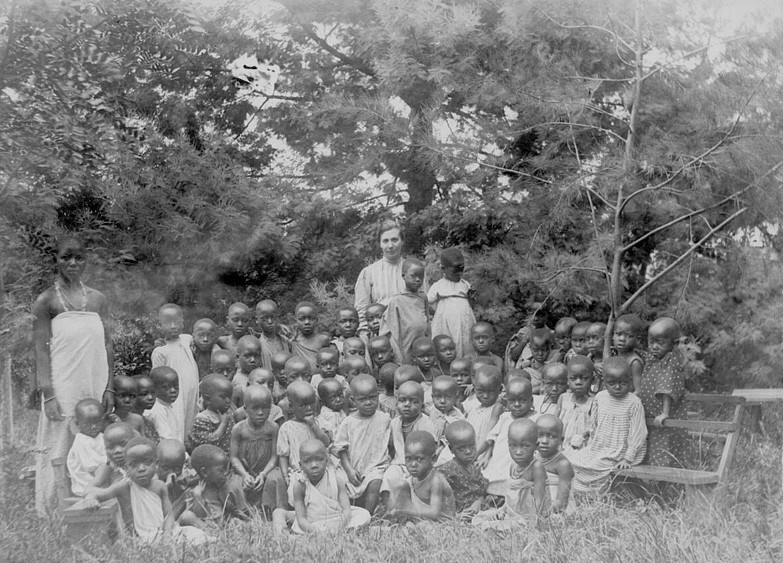
Elisabeth Seesemann and her assistant in the middle of her nursery school in Ashira.
Introduction
ECHOES OF KILIMANJARO presents one of the earliest and most significant collections of Chagga intangible cultural heritage. Between 1906 and 1909, Elisabeth Seesemann of the Leipzig Mission Society documented poems, songs, rituals, and everyday experiences on the slopes of Kilimanjaro, preserving voices and knowledge that might otherwise have faded from memory. Drawing upon newly digitised materials and sustained community engagement, this website shares these recordings in an accessible format intended for the Chagga community. It highlights ancestral wisdom, social organisation, spiritual practices, and the rhythms of daily life during a period of profound historical change. The narratives and insights presented here illuminate how Chagga communities understood their world, maintained cultural continuity, and adapted to emerging challenges.
Until 2024, these documents were unknown in Kilimanjaro. That year, Hartmut Andres visited Ashira parish to inform the community about Seesemanns work. A workshop with Ashira elders, funded by the Leipziger Mission, was then held to discuss next steps, leading to the current project, funded by Stiftung Preussischer Kulturbesitz and Deutsches Zentrum für Kulturgutverluste. The digitisation, research and publication of Seesemann’s legacy are complemented by intensive field research on Kilimanjaro carried out by Dr Valence Silayo, Rev Joyceline Njama and Elisia Mandara. This community-based provenance initiative emphasizes consultation with local communities and stakeholders on research and repatriation processes.
More than a historical archive, ECHOES OF KILIMANJARO serves as a bridge between generations. It invites readers to reconnect with the heritage of their ancestors, reflect upon the enduring strength of Chagga identity, and celebrate traditions that continue to shape life across Kilimanjaro today. It forms part of the Endangered Archives: Provenance and Digitisation of the Elisabeth Seesemann Recordings project, dedicated to safeguarding and returning intangible cultural heritage to the communities from which it originated.
This website serves as an initial point of access to Seesemann’s collections and other materials, as well as to the valuable contributions from the communities of origin that the field research on Kilimanjaro has yielded.
The first item to be made available here after 20 August will be the booklet that we are compiling and publishing for use in schools and for anyone interested. You can read it here or download it.
By the end of October, you will find a detailed website at this web address, which will also feature audio files of Seesemann’s recordings and the results of the community workshops.
Dr Valence Silayo & Hartmut Andres
You can already read and download the accompanying booklet for this project by clicking the button below.
AROUND 1900, the people living on Kilimanjaro experienced a fundamental change. Their traditional world, shaped by their ancestors, came into contact with that of the colonisers and missionaries, and within a few years was completely and forcibly transformed.
The Kibo as seen from Moshi in the 1890s. At first glance, the landscape appears empty and uninhabited to Europeans. But by every banana grove stands the house of a Wachagga woman.
Kidia Mission station circa 1900. On a bare hill, the European houses are visible from afar; in the background on the right is the small first church. The mission station is a landmark. The tall tree is what remains of the sacred grove ‘muungu’ that covered the hill in former times.
Traditional Chagga-homestad. The house is surrounded by a masale fence, the banana grove to the left, in the foreground: vegetable growing.
Missionary's house in Ashira. A stone house with a corrugated iron roof and a veranda running all the way round it. It is also surrounded by a masale fence. In the foreground is the vegetable garden with vegetables (lettuce) that Europeans introduced to Kilimanjaro.
AROUND 1900, the people living on Kilimanjaro experienced a fundamental change. Their traditional world, shaped by their ancestors, came into contact with that of the colonisers and missionaries, and within a few years was completely and forcibly transformed.
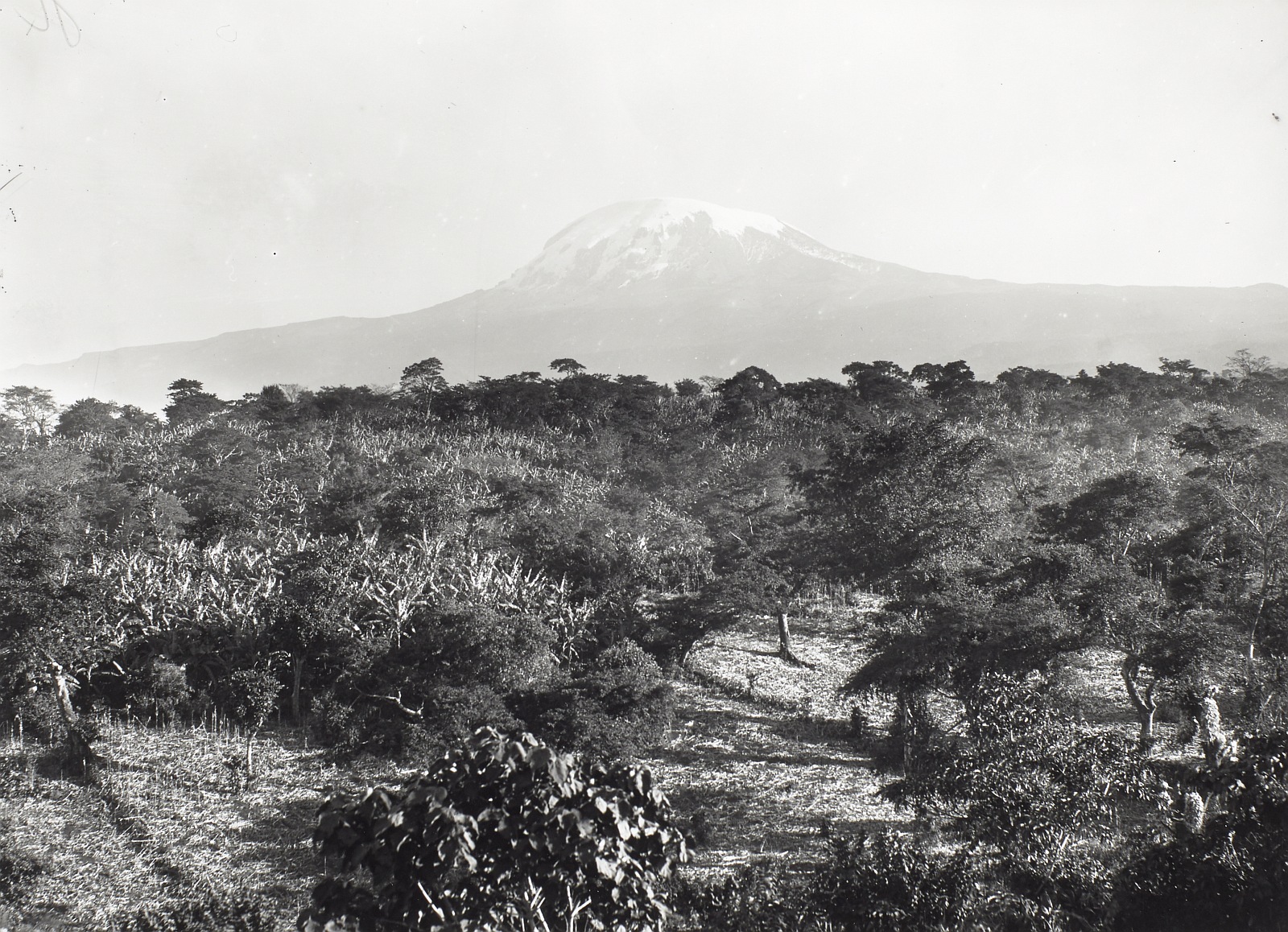
The Kibo as seen from Moshi in the 1890s. At first glance, the landscape appears empty and uninhabited to Europeans. But by every banana grove stands the house of a Wachagga woman.
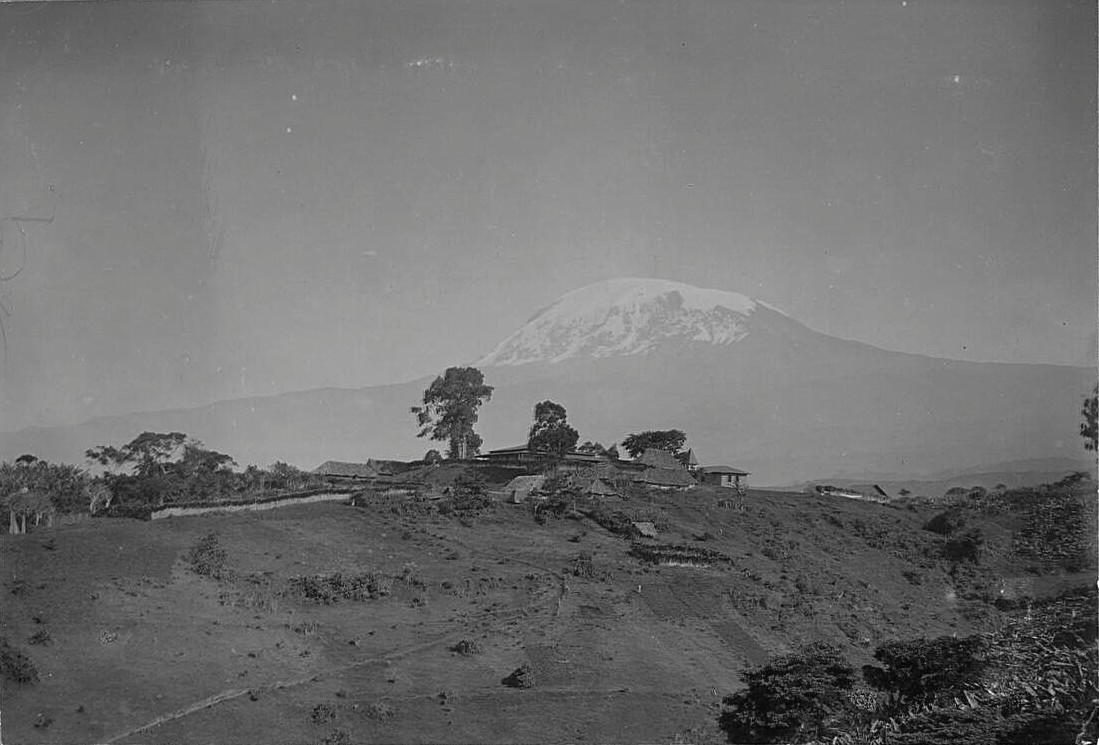
Kidia Mission station circa 1900. On a bare hill, the European houses are visible from afar; in the background on the right is the small first church. The mission station is a landmark. The tall tree is what remains of the sacred grove ‘muungu’ that covered the hill in former times.
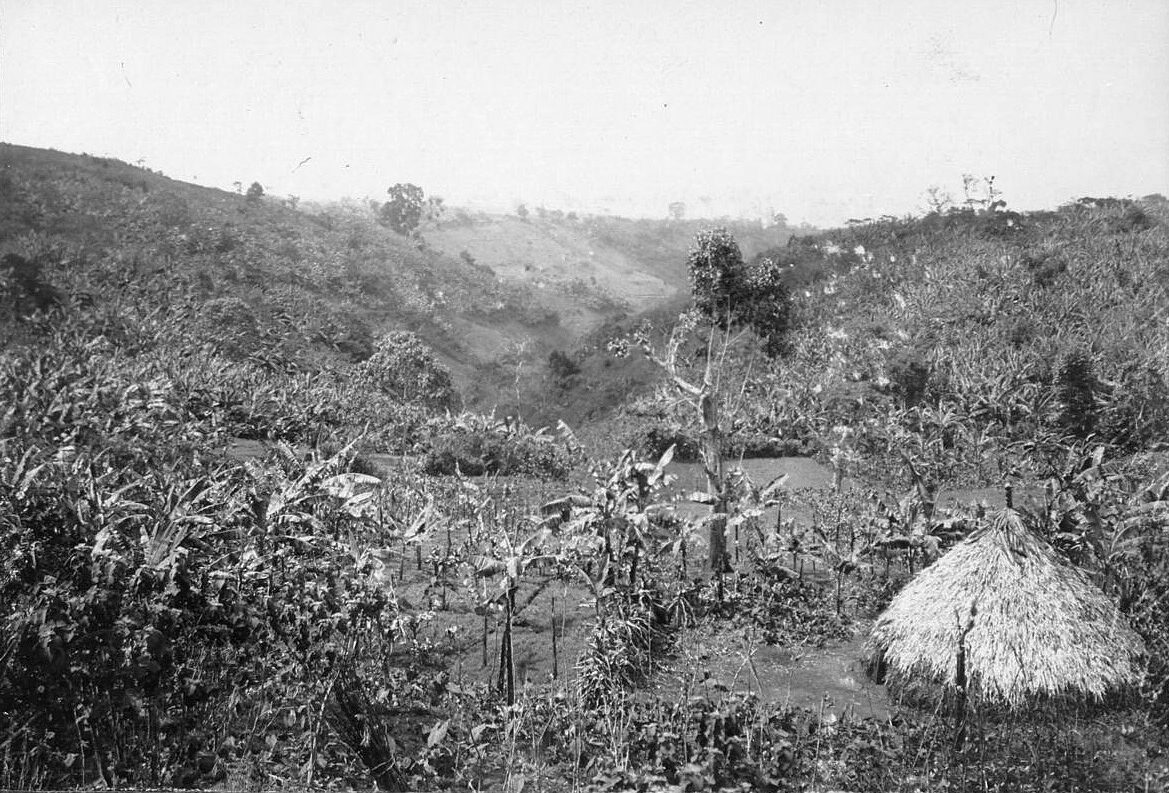
Traditional Chagga-homestead. The house is surrounded by a masale fence, the banana grove to the left, in the foreground: vegetable growing.
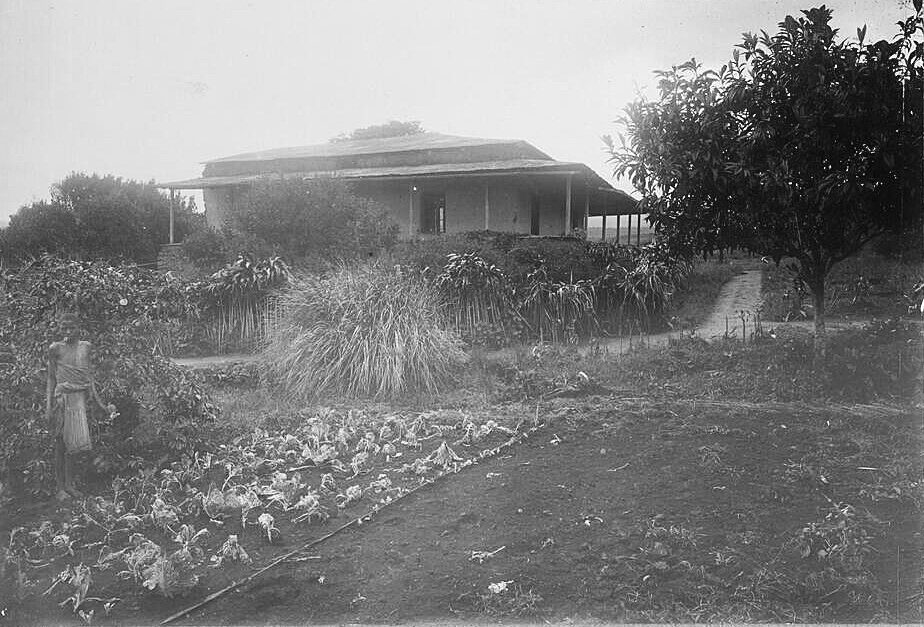
Missionary’s house in Ashira. A stone house with a corrugated iron roof and a veranda running all the way round it. It is also surrounded by a masale fence. In the foreground is the vegetable garden with vegetables (lettuce) that Europeans introduced to Kilimanjaro.
Photographs displayed on this website are courtesy of the image archive of the Leipzig Mission Society. The photographers are unknown. Other photographs were taken by Hans Meyer and are part of the Hans Meyer Photo Collection, available through Europeana.